
Cold case killer gets life prison sentence
PROTECTED CONTENT
If you’re a current subscriber, log in below. If you would like to subscribe, please click the subscribe tab above.
Username and Password Help
Please enter your email and we will send you a password reset link.


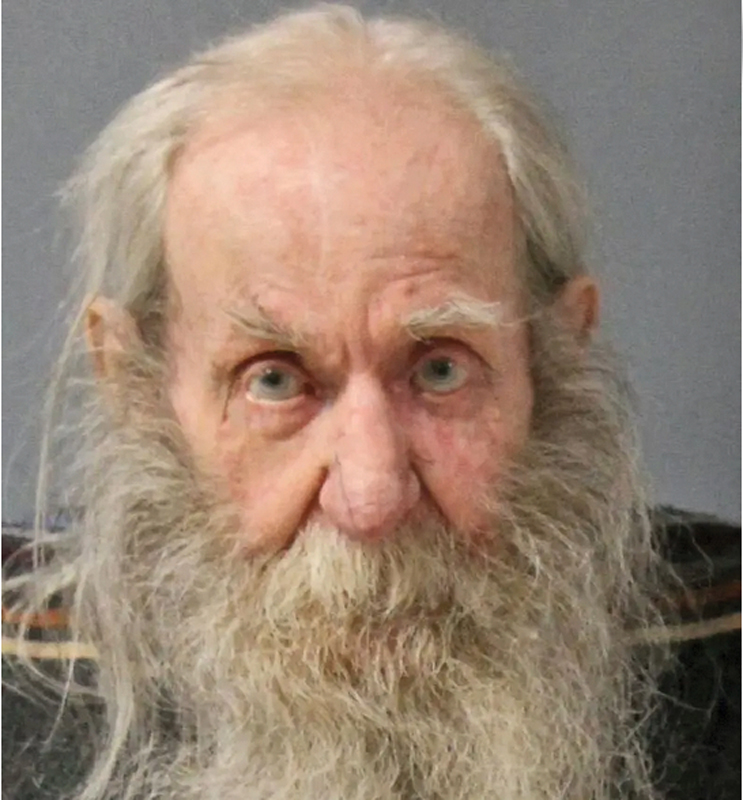
JON KEITH MILLER
By LeAnn R. Ralph
MENOMONIE — Jon K. Miller, accused of murdering Mary K. Schlais in 1974 and hiding her body in a snow bank in the Town of Spring Brook, has been found guilty and sentenced to life in prison.
Miller, age 84, and his attorneys Shelly Tomtschik and Travis Satorius, appeared before Judge James Peterson in Dunn County Circuit Court March 27 for a plea and sentencing hearing.
Miller pleaded “no contest” to the felony charge of first degree murder, and Judge Peterson accepted his plea and found Miller guilty.
Based on the sentencing structure in 1974, Judge Peterson sentenced Miller to life in prison and ordered Miller to pay a little more than $2,000 in restitution along with extradition costs of $482 as well as other court costs, according to on-line court records.
Under Wisconsin law today, first degree intentional homicide carries a mandatory sentence of life in prison.
Dunn County Circuit Court Judge Christina Mayer set bail at $1 million cash for Miller during a bail hearing held November 12, 2024.
Mary Schlais was from Minneapolis, and she was hitchhiking to Chicago to attend an art show in February of 1974 when Miller stopped to give her a ride.
Somewhere along the way, Miller asked Schlais for sexual contact. When she refused, he stabbed her with a knife he kept in the car, and then exited I-94, drove to a location in the Town of Spring Brook, dumped her body and tried to bury it in a snowbank.
Miller abruptly fled the scene when another car came along.
During the sentencing hearing, a family member of Mary Schlais’s said it was “a nightmare” for Schlais’s parents to have to bury their daughter and not know what happened to her.
A long road
The Dunn County Sheriff’s Department followed up on continuous leads over the years but were unable to identify any suspects.
Early in 2021, the Dunn County Sheriff’s Department had exhausted the possibilities available from a partial DNA profile developed by using a stocking hat left at the scene 50 years ago.
In the fall of 2022, representatives from the Dunn County Sheriff’s Department started talking to personnel at Ramapo College.
In November of 2024, through investigative genetic genealogy (IGG), investigators were able to use the partial DNA profile to identify Miller’s daughter and then to find Miller, who was living in Minnesota.
The search for Miller was complicated by the fact that he had been adopted as a child.
The Dunn County Sheriff’s Department worked closely with Cairenn Binder of Ramapo College in New Jersey.
Mary Schlais is buried in Champlin Cemetery in Hennepin County, Minnesota, according to information available on Find-A-Grave.
Her mother, Kathryn Schlais, died in 1986, and her father, Arnold Schlais, died in 1987.
A brother, James Arnold Edwards Schlais, died in 1993.
Gifted artist
Mary Schlais’s niece said Mary was a gifted artist, an equestrian, a world traveler and a scholar.
“Justice has no time limits,” she said during the sentencing hearing.
“I don’t know that anybody can make up for the loss of life, for the over 50 years that her family had to wonder what had happened,” Judge Peterson said.
Dunn County District Attorney Andrea Nodolf played the body camera footage in court from when investigators spoke with Miller last November after they located him in Owatonna, Minnesota.
“I don’t know what to tell you,” Miller said in the camera footage.
There was a long pause.
“All right. I did. I put her in a snow bank,” Miller said.
When Mary Schlais’s family thought of Mary, the family thought about what had happened to her. Now the family can think of her as a person, and “not just that final day,” Mary Schlais’s niece said.
Miller declined to speak at the plea and sentencing hearing.
Podcast
A podcast on www.echopress.com recorded in March of this year by Trisha Taurinskas, an investigative reporter, about another cold case in Minnesota, the murder of a 16-year-old girl, Joli Truelson, revealed some similarities between the two murders.
Joli Truelson was murdered two years before Mary Schlais was murdered.
Two eyewitnesses in the Town of Spring Brook who saw the car when Mary Schlais’s body was left in the snow bank described the car as being gold-colored.
The car that eyewitnesses had seen Joli Truelson getting into to hitchhike a ride in Minneapolis was described as a gold-colored Gremlin.
Mary Schalis hitch-hiked a ride in Minneapolis.
Miller had told investigators that the car he drove at that time was blue, although, over the years, the Dunn County Sheriff’s Department had used the description of the car as being gold-colored.
The descriptions of the driver of the car that Joli Truelson had gotten into matched the description of the driver seen in the Town of Spring Brook.
The two eyewitnesses from the Town of Spring Brook have since died.
Paperwork from 1977 divorce proceedings when Miller and his wife were divorced lists a 1971 Gremlin among the items included in the martial property.
A VIN number for the Gremlin also was included in the paperwork, although in 1971, a VIN number could not be used to identify the color of the car, the investigative reporter noted in her podcast.
It was not until 1981 that VIN numbers could be used to identify the color of the car, Taurinskas said.
A neighbor in Spring Brook said she had heard the car described as orange in color.
In 1971, the colors that Gremlins were painted included canary yellow and mustard yellow, and some people might call the mustard yellow car orange, the investigative reporter noted.
Jon K. Miller had been released from San Quentin prison in California and had returned to Minnesota a few months before Joli Truelson was killed in 1972 according to the podcast.
Miller was convicted of armed robbery in California.
Taurinskas states in her podcast that the Minneapolis police department had found a white t-shirt with blood stains that were not the same type as Joli Truelson’s blood type near where her body was found but the t-shirt had been thrown away as had other evidence.
Anyone who is interested in listening to the investigative reporter’s podcasts on the murders of Joli Truelson and Mary Schlais can find the podcasts at www.echopress.com/podcasts/the-vault.
Parts 1 and 2 of the podcast were available on-line as of March 30.
Both podcasts each are little more than 20 minutes long.
The investigative reporter said she had attended the sentencing hearing in Dunn County on March 27 and planned to include a Part 3.
