
Kilde retires from WestCAP after 30 years at the helm
PROTECTED CONTENT
If you’re a current subscriber, log in below. If you would like to subscribe, please click the subscribe tab above.
Username and Password Help
Please enter your email and we will send you a password reset link.


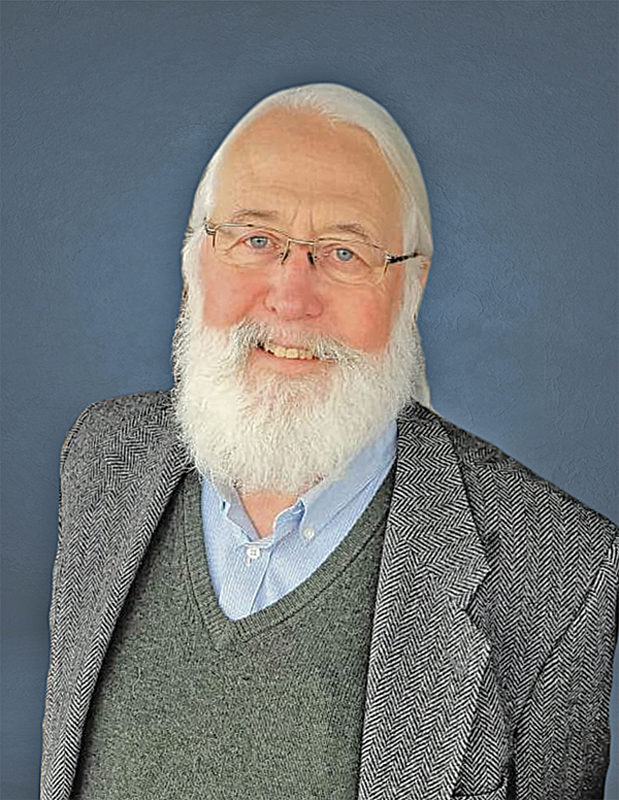 By Renee Bettendorf
GLENWOOD CITY- After working for 30 years and two weeks as the executive director of West CAP, Peter Kilde retired on February 7. Kilde, who was born in Eau Claire and spent 25 years working for another organization based in St. Paul, ended up in Glenwood City and at West CAP in a roundabout way.
“It didn’t work out quite as I had planned, it worked out way better,” said Kilde of how he ended up at West CAP.
Kilde was hired by West CAP, the community action agency headquartered in Glenwood City in 1995 after his mom happened to pick up a copy of The Tribune Press Reporter that had the headline: ‘West CAP seeks new executive’. The agency was conducting a nationwide search for a new executive director and after reading the story, Kilde applied.
“If it hadn’t been for the Tribune, I could have easily ended up on a totally different track,” he said.
At that time Kilde was living in Glenwood City with his wife and kids and commuting to Marine on Saint Croix for his job with another organization. Occasionally his mom would visit his residence and babysit his daughters and she purchased an edition of the newspaper at a gas station on her way to Kilde’s house. After he applied, West CAP’s nationwide search ended.
“I walked in, three blocks away,” he said. “It was a great fit”.
Kilde’s previous work history meshed well with what West CAP was looking for in an executive director. West CAP is a community action agency. These types of agencies were created by the Economic Opportunity Act of 1964. The act was planned by the Kennedy administration and then passed into law under the Johnson administration, according to Kilde.
Community action agencies were designed by the act to operate anti-poverty programs in their communities and to serve as a catalyst for local planning and advocacy. Last year the act celebrated its 60th anniversary and West CAP, which was one of the first community action agencies in the state, will turn 60 this year. Kilde looks forward to helping West CAP celebrate six decades especially since he was involved in half of those years.
“I’ll be involved in that in some way,” he said.
Previous to his time at West CAP Kilde worked for two and a half decades at a private organization called the Amherst Wilder Foundation. That foundation, which is still in existence, worked with low income neighborhoods in St. Paul.
Kilde was hired by the Amherst Wilder Foundation in a happenstance way. He was a freshman at Luther College in Decorah, Iowa and his brother and his brother’s wife lived in St. Paul and were working at a daycare center for the foundation doing some summer programs.
Kilde happened to be in town visiting them when they both came down with the flu. His brother called in and asked the director of the foundation if Kilde could fill in for them while they were sick, noting that Kilde was good with kids and had some experience as a camp counselor.
“I went in and then spent the next 25 years of my life at the Wilder Foundation,” said Kilde.
He filled in and got along well with the staff and ended up doing a variety of things during his time at the foundation. First, he became a certified preschool teacher in the state of MN and helped the foundation run a daycare program in St. Paul for five years.
He then went on to work within some residential treatment programs for kids with mental health illness that the foundation facilitated. In the last 15 of his years with the foundation Kilde worked mostly around the building, development and programming for the Wilder Forest, a piece of land that the foundation owned near the community of Marine on Saint Croix.
For his last 12 years with the foundation Kilde was the operations director of Wilder Forest. At first he put on some basic summer programs for kids at the forest. Then the foundation decided to develop the land a bit and built a regenerative farm on it as well as an environmental education center and conference center and Kilde was part of that process.
During the last few years that he was employed at the Wilder Foundation, Kilde got married, started a family and acquired his own small farm. The farm is located west of Menomonie and was originally owned by his great uncle. It didn’t have a house on it and the plan was to live nearby the property and eventually build a house on the farm. And that is how Kilde ended up living in Glenwood City and becoming employed by West CAP.
Thirty Years and Two Weeks
On his first day at West CAP Kilde remembers sitting behind his desk and feeling completely at home.
“I’m where I’m supposed to be, I thought to myself,” he said of his first day on the job.
Kilde said West CAP has been through all sorts of challenges throughout the years. Different presidents and administrations from both parties have tried to eliminate community action agencies either in part or in their entirety. Despite these challenges West CAP has grown from about a three million dollar operation to an 18 million dollar operation with thousands of people utilizing their services every year.
“At the end of the day we have support in the community, we know what we’re doing,” he said.
There are approximately 1,000 community action agencies in the nation and they cover 99% of the counties in the U.S. There are 16 agencies in Wisconsin. West CAP covers Barron, Chippewa, Dunn, Pepin, Pierce, Polk and St. Croix counties, according to Kilde.
Kilde said that CAP agencies are ‘different animals’ that were created to be owned and managed locally. They all have a very diverse board of directors that have to have three sectors represented: elected government officials, community organizations and low income representatives.
West CAP’s board of directors come from all seven counties. The low income members are elected, each county sends representatives and people from different organizations such as a credit union, university or the Farmers Union also have membership on the board. With that wildly diverse board they have never missed a quorum and they have 10 board meetings a year, said Kilde.
“The structure is remarkable,” he noted. “They have a very strong network.”
The mission of these types of nonpartisan agencies is to alleviate poverty and they have a lot of opportunity for creativity. They are good at getting programs up and running quickly and they can also stop programs quickly. They have a lot of flexibility and work very constructively with whoever the voters elect and offer to help with their constituent issues, said Kilde.
“We’re embedded in the community,” he noted.
In addition to these local boards, CAP agencies work on regional, state and national levels and Kilde has been involved with each level.
Within two years of starting at West CAP, Kilde became the president of the state CAP association, known as WISCAP. From there he got on the regional board and within a couple of years became president of that board. Eventually he ended up on the national board for 20 years.
“I continue to be very involved with that organization,” Kilde said of the national board.
A couple of West CAP accomplishments that especially stand out for Kilde involve programs that are aimed at transportation and affordable housing. Jumpstart, the low income car ownership program that the agency started in 2000 was impactful both locally and nationally.
Jumpstart caught the attention of the Brookings Institution, a nonprofit public policy organization based in Washington, DC and the Annie E. Casey Foundation, a private philanthropy organization. As a result, Kilde was sent all over the country to speak to other CAP agencies about how to get this type of program up and running. West CAP still has the Jumpstart program and about 1,000 families have benefited from it.
Energy efficient affordable housing is another stand out for Kilde. Over the years West CAP has created over 600 housing units with an emphasis on green energy. One housing project in River Falls was built with 580 solar panels on the roof and 36 on poles outside. The energy cost savings was quite significant and actually helped to keep the rent affordable for residents.
The property was featured on an Earth Day video produced by the federal HHS Office of Community Services in 2022 and won an Edson Award for Green and Healthy Affordable Housing, an award that recognizes affordable housing developments that use the low income housing tax credit to create sustainable communities. West CAP continues to work on affordable housing with their current project being a netzero housing project located in Ellsworth.
Kilde said his favorite parts of his time at West CAP were being able to sustain and grow the agency with a fantastic staff. He feels a lot of gratitude for being able to work with people who want to help make the world a better place.
“I just like these people very much,” he said of the staff.
A Castle in Scotland
Kilde built a house on his farm about 13 years ago and he still lives there with his oldest daughter. In retirement he plans on having time to work with sustainable forestry and free range chickens on his farm. He also will continue to be involved in several organizations including but not limited to: the Wisconsin and National United Way ALICE research advisory councils and the National Partnership for Climate Resilience.
“I’m not going anywhere, I didn’t buy a castle in Scotland,” Kilde joked.
