
Remembrances of Christmases Past Mary Ellen Ralph: Norway was the experience of a lifetime.
PROTECTED CONTENT
If you’re a current subscriber, log in below. If you would like to subscribe, please click the subscribe tab above.
Username and Password Help
Please enter your email and we will send you a password reset link.


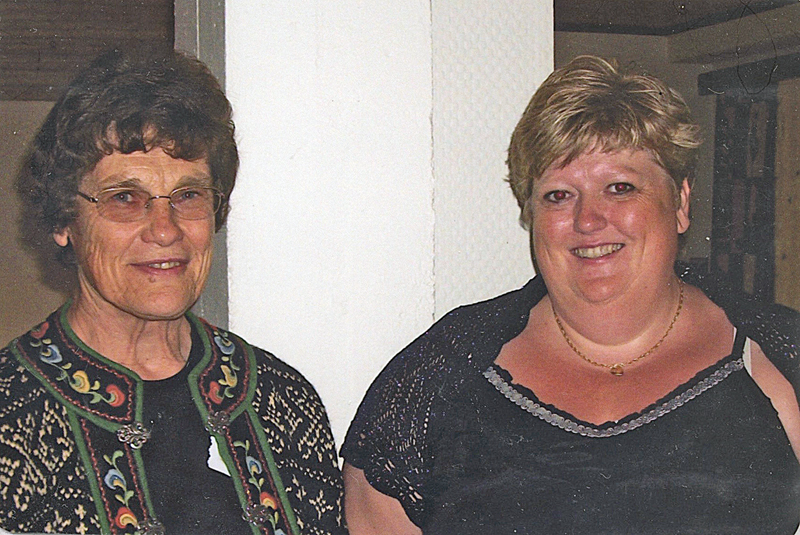
GODMOTHER — Mary Ellen Ralph with her god-daughter, Gunn Kristin, during the family reunion in Norway in 2011. If you look closely, you can see the locket Gunn Kristin received for her baptism from Mary Ellen. The sweater Mary Ellen is wearing is the Norwegian sweater she made for her grandmother. —photo submitted
By LeAnn R. Ralph
COLFAX — Never in her wildest dreams did Mary Ellen Greenhill ever think she would live in Norway.
And work as a nurses’ aid and as a nurse.
For two and a half years.
But she did.
Mary Ellen Greenhill Ralph considers her time in Norway, on a visit with her mother and father in 1968, and then living and working there, and then another family reunion trip more than 40 years later in 2011 with her husband, Ingman, and other family members, to be precious gifts — Christmas gifts — that keep on giving even today.
All these years later, Mary Ellen still corresponds with friends and relatives in Norway.
In years past, they would write letters to keep in touch. Nowadays, they use e-mail messages.
So how did a young lady from Sand Creek end up living in Norway?
“My father, Harold Greenhill — Grønhaug was his name in Norway — Greenhill is the Americanization of it. He came to America when he was about 20 years old. He already had four siblings here. Erik. Ole. Guri (Gertie). And Anna. They were living in the southern part of the state,” Mary Ellen said.
“Growing up, I was always fascinated when some of his siblings came to visit. They were talking so fast in a language I couldn’t understand. But I was very fascinated and drawn to that. I graduated from Swedish Hospital School of Nursing in Minneapolis in 1965 as an RN. My first nursing job was at Luther Hospital in Eau Claire,” she said.
“While in Eau Claire, I attended Bethesda Lutheran Brethren Church. I read an article in the church paper about a choir going to Norway, and they wanted to fill up the seats,” Mary Ellen recalled.
“My parents, at the time, were still on the farm in Sand Creek, but they’d had an auction. They were still living at the farm, though. So I went home, and I said, ‘I’m going to Norway. Do you want to go, too?’ It had been quite a few years since my dad had been back to Norway. He had gone back once. And my mother had never been to Norway. And they said they would go,” she said.
Mary Ellen’s mother’s family on both sides were Norwegian, but Mary Ellen’s mother, Evelyn Melgaard, was born here in the United States.
“It was really helpful for me. Then I could be my dad’s daughter and not have to worry about trying to make myself acquainted with people. My mother’s dad was born in the same valley that my dad was born. My dad was born and raised in Hedal in Valdres,” Mary Ellen said.
According to several websites, one of the features Valdres is known for is exceptional trout fishing.
Mary Ellen’s dad would talk about all the fishing he had done while growing up in Norway.
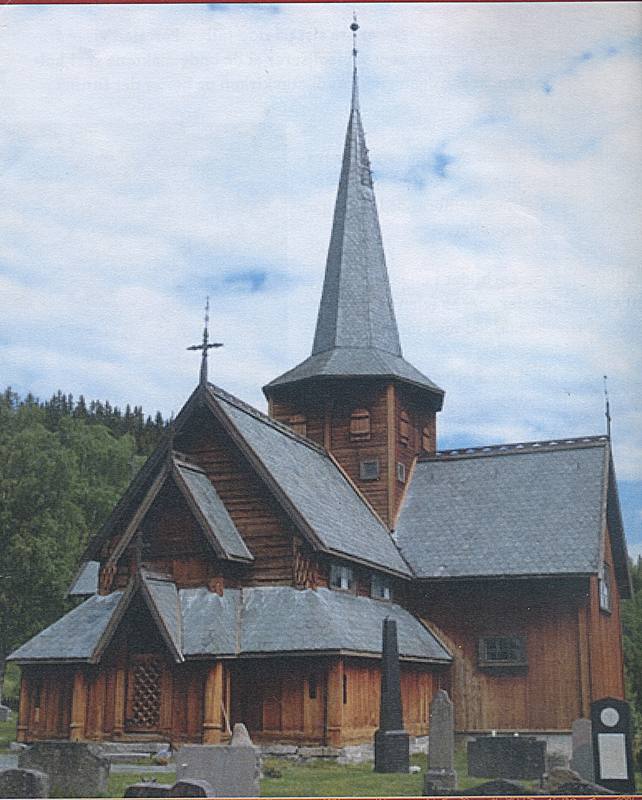
HOME CHURCH — The Hedalen Stave Church in Norway was the home church of Mary Ellen Ralph’s father, Harold Greenhill, and also was the home church for Mary Ellen’s maternal grandfather.
—photo submitted
June of 1968
When Mary Ellen and her parents left for Norway, Mary Ellen had planned to return to the United States.
“We left for Norway in June of 1968. I had originally planned after returning to America to go to Fergus Falls, Minnesota, to go to bible school. But I really had a desire to stay in Norway. I prayed about it,” she said.
“I contacted the Norwegian Nurse’s Association. And they said that since I didn’t know Norwegian, I should either work for a family and learn it or go back to the USA and learn it. But they also said I could have a chance to visit a Norwegian hospital,” Mary Ellen said.
“So I did get to visit (the hospital) while my parents were visiting other relatives. My dad had an older brother and his family and twin sisters and their families. The others had come (to the United States),” she said.
The hospital turned out to be like no other hospital Mary Ellen had ever been to.
“After the visit to Ullevaal Sykehus (pronounced “seek-ah-hoos” —sick house), the people said if I was willing to work as a nurse’s aid and willing to stay for six months, I could live in the nurses’ dormitory at the hospital. It was a huge hospital. It was a little like a city. I had been praying about what I should do. I felt the door was open for me since I had a job and a place to live,” Mary Ellen said.
To ensure that she could stay, Norway’s newest nurse’s aid took an unprecedented step.
“I sent my return ticket back so I wouldn’t be pressured to not stay. When my parents learned about this, my mother said, ‘You won’t earn enough to pay for a postage stamp to write home!’ But my dad said, ‘There’s nothing wrong in it,’” Mary Ellen recalled.
Receiving her father’s blessing made all the difference.
“As things turned out, I stayed for a two and a half years. And I got officially accepted as a Norwegian nurse,” Mary Ellen said.
Visiting home
The next Christmas, Mary Ellen and her two aunts, Marie Hagen and Sigrid Høghaug, made a trip back to the United States.
“At Christmas of 1969, my twin aunts, Daddy’s twin sisters, and I came back to the United States to visit. I don’t remember if it was two weeks, maybe it was more than that. It was a decent amount of time,” Mary Ellen said.
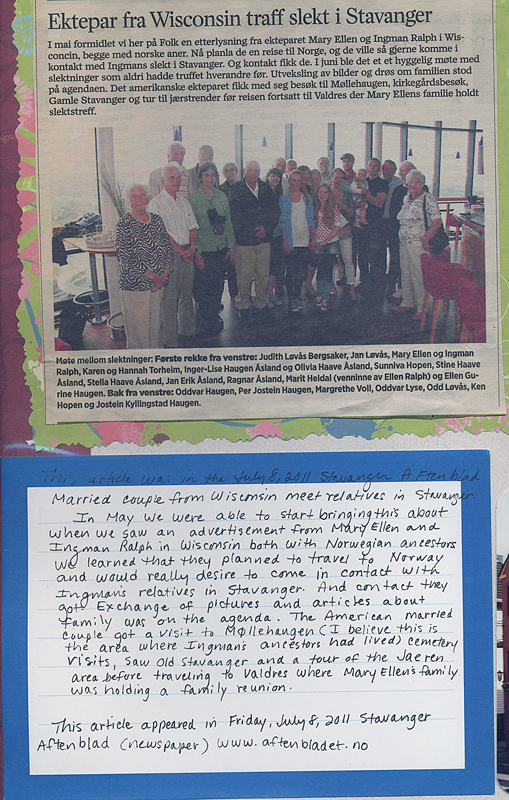
CELEBRITIES — The newspaper in Stavanger, Norway, published a photo of the family reunion and a small write-up about the people from Wisconsin who came to visit. The photo was published in July of 2011.
—photo submitted
“So I not only had more than enough for a postage stamp to write home, I could come home. And my aunts had wanted to come. I knew it was not easy for the hospital to let a person have vacation at that time. It wasn’t really quite fair. But they let me go. So I was determined when I did actually leave that job that I would sort of make up for it and work the last Christmas and New Year’s. And I did,” she said.
Godmother
While Mary Ellen lived in Norway, she was able to connect with other relatives.
“Before I left Norway, my cousin, Bjorg Gunvor Reinli, asked me to be a baptismal sponsor for her daughter, Gunn Kristin Reinli. I thought that was pretty special,” Mary Ellen said.
Bjorg Gunvor Reinli loaned a bunad to Mary Ellen to wear for the baptism.
A bunad, which is made of wool, is the national costume of Norway. There are more than 400 different kinds of bunad, each one unique to a particular area in Norway, and wearing a bunad is a statement about identity.
“Even though I didn’t get to bible school, I had an opportunity to be in some small group bible studies through The Navigators, which is an interdenominational international group. ‘To know Christ and to make him known’ is their motto.’” Mary Ellen said.
“I had many opportunities to make friends and to know relatives,” she said.
Family reunion
“Then an opportunity came up in 2011. My relatives in Norway wanted a reunion of descendants of my grandma and grandpa. My brother, Gaylon, and his wife, Hannah, and my sister Thelma and her husband, Jake, nephew Paul and his wife, Deb, and Ingman and I were excited to go,” Mary Ellen said.
“There were about 60 descendants that came. It was a big deal. It was really special. At this reunion, Gunn Kristin, came up, and she said, ‘this is the locket you gave me, plus a bible, for my baptism.’ Gunn Kristin had used the locket a lot,” she said.
Mary Ellen finds it quite remarkable that more than 40 years later, the locket she had given as a baptismal gift was still being worn by the baby who had received it.
Finding relatives
“I have a wonderful friend, Marit Heldahl, we lived right next to each other in the dormitory at one time. And we’ve kept in contact ever since. We e-mail each other now. I told her since we were going to go to Norway, we were interested in Ingman’s family,” Mary Ellen said.
Both of Ingman’s mother’s parents were immigrants from Norway. Ingman’s grandfather was a little boy when he came to the United States. Ingman’s grandmother was an adult when she arrived here.
“I did a research query at the library. There was information about how to do a query. And I got information from obituaries,” Mary Ellen said.
“Ingman’s grandma, Inga, and her parents and her sister and brother came in the early 1900s. And they came to Norton from Stavanger (Noway). Which is mind boggling. To come from Stavanger and end up in Norton. I used different resources and different help. And one of them suggested I put it in the newspaper, the Aftenblad in Stavanger, that we were planning a trip to Norway, and we were interested in meeting relatives and that we would be two days in Stavanger,” she said.
Mary Ellen had received a letter from the State Archives in Stavanger relating to genealogy of Olava Lovaas. Her father, Ole Lovass, was Ingman’s great-grandfather.
“They are the ones that recommended me to contact the largest newspaper in the area, The Stavanger Aftenblad,” she said.
Meanwhile, Mary Ellen’s friend, Marit, also had found information about Ingman’s relatives and where they were buried.
“Marit had written on May 27, 2011, that she had had a long phone call with Margretha Voll that day,” Mary Ellen said.
Margretha Voll turned out to be Ingman’s second cousin.
“Marit wrote that Margretha is a very nice person that Ingman can be proud of having in his family. Margretha … remembered very well being a little girl staying with her grandparents Olava and John Mikal. She had many good memories of them … Margretha made many calls to cousins and other family members and informed them about us,” Mary Ellen said.
“Marit also informed Margretha about the days we intended to stay in Stavanger and where we would be staying. Marit said that Margretha wrote down Marit’s phone number. Then Marit wrote to us that now we can relax!” she said.
“Margretha, Ingman’s second cousin, picked us up from the overnight train from Oslo to Stavanger. And Marit came with. She fed us and took us up to this tall building. We had a nice meal at the very top,” Mary Ellen said.
“We could see that ski jump (in Stavanger) from the breakfast table. You could look out the window from the kitchen table and see it. And all kinds of cheeses,” Ingman said.
One of the cheeses he especially liked was Brunost (a brown goat cheese).
The different cheeses were all delicious, and “addicting,” Ingman noted.
Seter
While they were in Norway for the family reunion, they went to the mountain farm where Mary Ellen’s family had spent their summers.
“We went to the seter. The mountain pasture land. Now they don’t use it for pasture. It’s more for cabins. They bought milk and we made cheese. They learned the (American) National Anthem and played it for us,” Mary Ellen said.
“My mother’s dad came from the same valley. There is a Christian Retreat Center, owned by my second cousin, so we stayed there, even though it was a reunion for my dad’s side of the family. When we weren’t busy with my dad’s side of the family, then (my mother’s) side of the family invited us to do things,” she said.
“Everybody was so welcoming and so friendly. They couldn’t do enough for you … I was really grateful for the opportunity,” Mary Ellen said.
“We stayed at that bed and breakfast, too,” Ingman noted.
“They were going to treat us to pizza, and a pizza cost about $50. I think the minimum wage was like $28 an hour,” he said.
“The McDonald’s was expensive, too,” Mary Ellen said.
Wanting to be found
When Mary Ellen was looking for her husband’s relatives in Norway, some suggested that perhaps the relatives may not want to be identified.
“Gaylon (Mary Ellen’s brother) said, ‘Maybe they don’t want to be found.’ But Margretha, Ingman’s second cousin, had tried to find people here, but ran into roadblocks and it was so expensive and she had given up on it. They were very glad to be found,” Mary Ellen said.
“They said, the only bad thing was, ‘you didn’t stay long enough.’ Daddy had a saying, ‘You don’t want to wear out your welcome.’ That was pretty special that they thought we did not stay long enough,” she said.
“We feel very blessed and fortunate. First that I had the experience of working there. And then coming back and meeting relatives,” Mary Ellen said.
“I saw more people on that short trip than I did when I was there for that two and a half years …We lived by my mother’s family. But my dad’s family was a mystery about where he grew up,” she said.
On their trip to Norway, they were often treated to the heart-shaped waffles are are a national delicacy.
“One day, we had them three times. At the bed and breakfast. Almost every place you went, when they were giving you a treat, it was those waffles,” Mary Ellen said.
Mary Ellen’s grandfather was a shoemaker in Norway, and the tools that he used in shoemaking are still in existence, and Mary Ellen’s Norwegian relatives have them on display.
“We got to see where they had grown up and where they had picnics. Sixty people coming to the reunion. It was a fancy meal (from those related) on my mother’s side. They had their bunads on. I had the Valdres sweater that I made for Grandma Melgaard. My Aunt Maria helped me every step of the way to make it. I got the material and embroidered a national dress. I did not get married in it, but I used it as a going away dress, from Valdres,” she said.
Mary Ellen noted that she ended up getting the sweater back because her grandmother said the sweater was too heavy for her to wear.
Christmas
“The first Christmas I was there in Norway, I was with relatives. You were welcome any time you wanted to come … they always thought it was nice when you came,” Mary Ellen said.
“One of the things they did was put the Christmas tree in the middle of the floor, and then you’d hold hands and go around the Christmas tree singing Christmas carols,” she said.
“They decorated their Christmas trees with little woven paper baskets and garlands of Norwegian flags. Those are the things I remember the most. And the warmth of the people. Even in Stavanger, the only bad thing, they said, ‘is you didn’t stay long enough,” Mary Ellen said.
When Mary Ellen was growing up, her mother did quite a lot of baking, including Christmas baking, and she made untold pieces of lefse.
Mary Ellen is known for making good lefse, too.
“The lefse recipe I use was my great-aunt’s recipe. Aunt Alma. My mother did lots of baking. Sandbakels. Fattigman. Rosettes. She could do it all. Julekaga and fruit cake, too. I think they thought they had to have so many kinds of baking for when people came to visit at Christmas. My mother made candy that was really good, too. Divinity,” Mary Ellen recalled.
