
REMEMBRANCES OF CHRISTMASES PAST: Dale Rostamo: “Our Christmases were pretty simple. I miss those days.”
PROTECTED CONTENT
If you’re a current subscriber, log in below. If you would like to subscribe, please click the subscribe tab above.
Username and Password Help
Please enter your email and we will send you a password reset link.


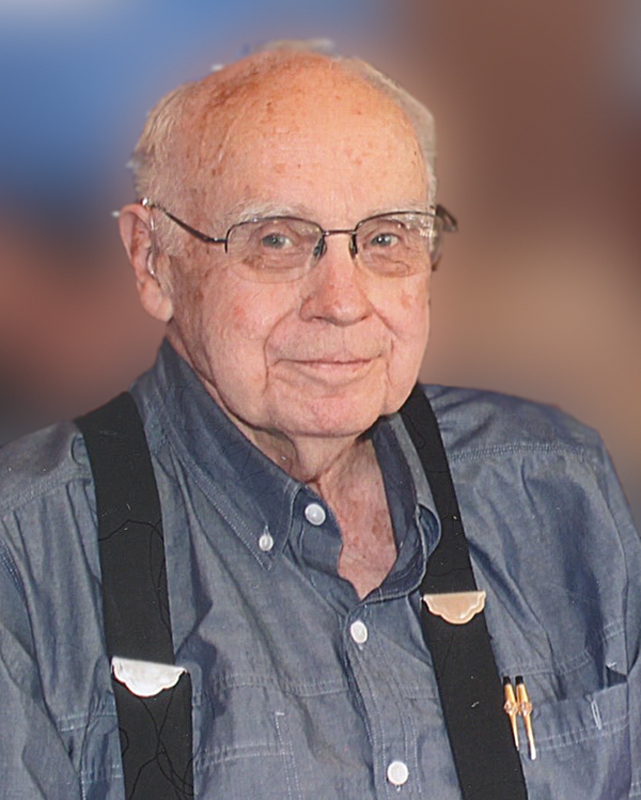
Dale Rostamo
By LeAnn R. Ralph
COLFAX — For Dale Rostamo, who grew up on a farm northeast of Colfax, Christmases at the Running Valley school were always something special.
The Running Valley School was located east of Colfax on county Highway A, a picturesque school built of locally-quarried stone that was demolished in November of 2021.
Dale, the son of Erling and Delilah Rostamo, graduated from Colfax High School in 1952 and attended the one-room Running Valley School all through grade school.
Dale was actually born on his grandparents’ farm north of Colfax, and he had two sisters, MaryAnn and Betsy.
“I remember we had planks stored in the basement at school, and before Christmas, the bigger boys would bring the planks upstairs and build a stage,” Dale said.
All of the students at school — and when Dale graduated from eighth grade, there were 33 students — had a part in the annual Christmas program.
Even the smallest of the students in first grade had parts in the program, he said, noting that back in those years, there was no kindergarten.
Clara Berg was the teacher during most of the years when Dale attended Running Valley School, and she spent quite a bit of time planning for the Christmas extravaganzas.
“She was very good at it,” Dale said.
The students would begin practicing for the program just after Thanksgiving, and the program would be held at school the week before Christmas.
One of the highlights of Christmas at Running Valley School is that Dale’s aunts, his mother’s sisters, were always invited to come to the Christmas program.
“They wanted to come and see us play the parts and to have a good laugh,” he said.
As you might imagine, the school was packed with guests.
“We always set up benches in the back for the additional people who would come,” Dale said.
One or two weeks before the Christmas program, the students would be busy putting up decorations at the direction of Mrs. Berg and would also decorate the school Christmas tree that was donated by Victor Sundby.
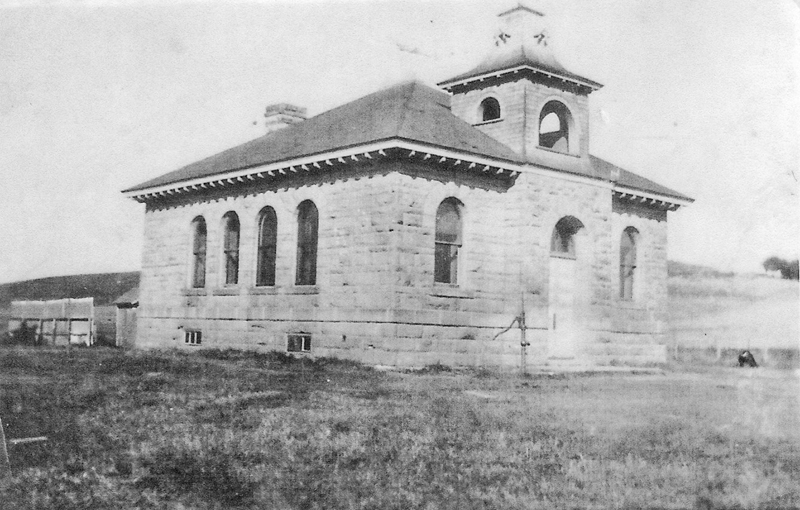
BACK IN THE DAY — This photograph of Running Valley School, which was on county Highway A east of Colfax, is pretty much what the school looked like when Dale Rostamo went to grade school.
—photo submitted
The Sundby farm was right across the road from the school, Dale said.
Holden Church
High school was different, and there were not the Christmas programs that had been held in the one-room school, but there were church functions in which teenagers participated.
“We always enjoyed putting up the decorations at church and being in the Sunday school Christmas program,” Dale said.
Dale attended church at Holden Lutheran, just north of Colfax on county Highway M.
Every year, there was always the anticipation of finding out who was going to play the major parts in the Nativity scene, he said.
“I never had any of the big parts, but my girlfriend at the time played Mary one year,” Dale recalled.
As was the case with Running Valley School, Holden church was always packed for the Christmas programs, too.
“At the end of the program, Alfred Larson would hand out small paper sacks to each child that had candy, peanuts and an apple,” Dale said.
“Alfred Larson was a big, kind of scary guy, and he always was the one to hand out the paper bags,” he said.
In those days, candy was a scarce commodity, and the candy in the paper bag was always the hard ribbon candy, Dale said.
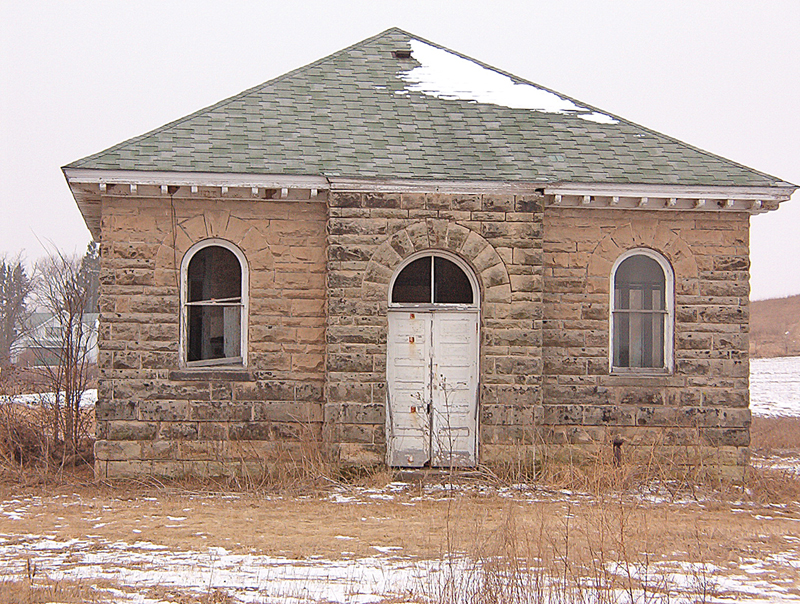
GONE FOREVER — This photograph of Running Valley School on county Highway A east of Colfax was taken a while before the building was demolished in November of 2021. —photo submitted
Norton Christmas
For their family Christmases, the Rostamos would to go Norton for Christmas Eve supper at the home of Dale’s grandparents, Herman and Mary Grimsrud.
Norton is located between six and seven miles west of Colfax on state Highway 170. The Norton Church still exists, and the old Norton school, by the railroad tracks, is now a private residence. A little farther down the road is a small cluster of houses, and there is an empty spot where the Norton store used to be located. At one time Norton had a creamery, too, as well as a few other businesses over the years.
“We would have Christmas Eve supper there at Norton, and then we would go back the next day for Christmas dinner,” Dale said.
Christmas dinner always featured lutefisk and turkey, he said, and the family would go to Christmas Day church services at Holden before heading out to Norton for Christmas Day dinner.
For those who are not familiar with it, lutefisk, a Norwegian delicacy, is dried fish preserved in lye that is boiled or baked and served with butter.
“When my grandparents were too old to continue with all the hard work of making dinner, then they would come to our house for Christmas,” Dale said.
Reverend Moe
Reverend Moe was the pastor of Colfax Lutheran Parish at the time when Dale was growing up.
The pastor “had a reputation of giving a long sermon on Christmas Day,” Dale said, adding, “some people complained about it, too.”
But, Reverend Moe was a traditional pastor who believed in the traditional ways, and he always spent a long time preparing for Christmas and for Easter, Dale noted.
And of course when you live on a farm, in between the suppers, dinners, Christmas programs and church services, the chores always had to be done.
“We had to keep the cows happy!” Dale said.
After the chores were finished on Christmas Eve, then the gifts would be handed out, and then they would go to Norton to have a traditional Christmas Eve supper of oyster stew.
“Our Christmases were pretty simple. I miss those days,” Dale said.
Another special part of Christmas dinners were his mother’s sisters — Rosie, Klea, Orpha and Phyllis.
“They would all be there for Christmas Eve, and that was always special because we didn’t see them very often,” Dale said.
During World War II, Christmas was a rather subdued holiday. People were saving their money for the war effort, and certain items, such as sugar, were rationed, so Christmases were quiet, he said.
“There were not many toys received at Christmas during the war years. It was all pretty quiet,” Dale said.
After World War II ended, then people were willing to celebrate again and to enjoy the holidays, he said.
Jule Bokk
Another activity of the Christmas season was the tradition among people of Norwegian descent called Jule Bokk, or “Christmas fooling.”
Between Christmas and New Year’s, neighbors and friends would dress up in old clothes and disguise their faces and would then go around to different houses late in the evening and knock on the door, Dale said.
If you could identify them, they would say “Merry Christmas” and go on their way to the next place, he said.
If you did not know who they were, then you had to invite them into the house and give them a treat.
At the Rostamo home, the treat was cookies and cake, Dale said.
One year when Dale was a young boy, they had all gone upstairs to retire for the night.
And then — there came knocking on the door.
“And they kept knocking. Finally I got up and went downstairs, and it was a little scary to open the door, because I didn’t know who any of them were,” Dale recalled.
The people going around for Jule Bokk could have been your neighbors, or the people could have been someone you did not know at all, he said.
Specialities
In addition to lutefisk, there were always other special treats for Christmas, such as lefse, Dale said.
For those who are not familiar with it, lefse is a Norwegian pastry made from potatoes and served with butter, sugar and sometimes cinnamon. The lefse dough is rolled very thin, and baked on a hot, dry griddle until brown “freckles” start to form.
Besides the other delectable treats, there was rullepolse (pronounced “rule-a-poolsa”)
Rullepolse translates into “rolled sausage.”
Rullepolse is a meat dish made of flank steak spread with onions and rolled up with a layer of pork. It is put into a five-gallon crock with hot water and a couple of boxes of allspice, and then several weeks later, you take it out of the crock, boil it, slice it and serve it on bread, Dale explained.
Internet sources say that rullepolse can be served on julekake, too.
“My wife used to make it, but then the meat and the allspice got to be too expensive,” Dale said.
Recently, Dale learned there is a meat market in Blair that makes rullepolse and offers it for sale.
“The next time they make it, I’ll find somebody to go down with me, and I’ll get some,” he said.
According to a Facebook posting from the Blair Meat Market, three years ago, rullepolse was selling for $15 a pound, although the owner of the meat market said they try to keep it in stock all year.
Allspice is made from the dried unripe berry of the Pimenta dioica, an evergreen tree in the Myrtle family that grows in the West Indies, southern Mexico and Central America.
A mixture of cinnamon, nutmeg and cloves can be used as a substitute for allspice.
Pickled herring also was a fixture of the Christmas season, Dale said.
Rosettes, sandbakelse and fattigman were part of every Christmas, too, he said.
“We had a truly Norwegian Christmas. A few times we went to the Rostamo side for Christmas. Grandma Rostamo did not hardly speak any English,” Dale said.
“Growing up, all of the food we had was great,” he said.
Scientist
One of Dale’s memories from growing up happened in the fifth grade when he went to Running Valley School.
Dean and Donny Hones also went to Running Valley School
Dean was interested in science, and one Christmas, Dean got a chemistry set, Dale said.
The route home, walking from school, took them right past the Hones’ place, and Dean would ask Dale if he wanted to see the experiments Dean had conducted with his chemistry set.
Dean Hones’ chemistry experiments were so intriguing, “I begged my mother for a chemistry set for Christmas — and I got one,” Dale said.
After that, he would tell Mrs. Berg about his experiments, and she asked him to bring some of his experiments to show to the other students.
“I set (the experiments) up right on her desk. I did my experiments on the teacher’s desk,” he said.
One demonstration Dale performed for his fellow students was to show how metal burns.
“I used magnesium, and — I used too much. I put it in a steel cover, like the cover of a pickle jar, and it went off with huge POOF. It blew away the cover and burned a nice round hole in Mrs. Berg’s desk,” Dale recalled.
Fortunately, his teacher was not at all upset.
“I left a lasting marker on Mrs. Berg’s desk,” Dale said, adding that it was good lesson in not over-doing things.
Magnesium is described as a silvery-white metal that burns with a bright light.
Dean Hones also was interested in airplanes and pilots and how to be a pilot and also got Dale interested in airplanes.
The science at grade school provided a basis for his career, Dale said.
Kenneth, the father of Roger, Dean, Don and June Hones, was promoted to be president of the Farmers Union of Wisconsin, and the Hones family left Running Valley to live in Chippewa Falls, he noted.
Computers
Dale Rostamo spent his career as an electrical engineer, designing interfaces for computers for Univac (Universal Automatic Computer).
He installed computer systems all over the world for international customers and ultimately spent quite a lot of time flying in airplanes.
“After I graduated from college, there were no jobs in my field available,” Dale said.
Dale graduated from UW-Eau Claire with a degree in physics.
“I did my practice teaching at Colfax, and then I took a job at Whitehall for the second part of the year,” he said.
Univac had invented a new computer system, and the company was looking for people to provide support for the new computers.
“I applied, and when they found out I had computer training in the Army, they hired me,” Dale said.
Dale Rostamo served in the United States Army from 1954 to 1956. After basic training, he went to the Army’s Signal School at Fort Monmouth, New Jersey, where he received training in computers for the computers used with anti-aircraft guns.
“I was hired to figure out how to support the new computer system invented by Univac,” Dale said.
The new computer system was a computer that was mass produced. Prior to that, computers were individually built by hand, he explained.
Before attending UW-Eau Claire, Dale went to school for one year at UW-River Falls on a scholarship that Ken Poppy had gotten for him.
Ken Poppy was the football coach at Colfax High School.
Dale transferred to Eau Claire after that, and then he was drafted into the United States Army.
In more recent years, Dale Rostamo served on the Board of Directors for the Colfax Health and Rehabilitation Center and was on the board when the new facility was built and opened in the late summer of 2013.
😊 ours were really simple. Old man Don Rostamo wasn’t around. Had a great mom though.