
Dunn County judge sets bail at $1 million cash for cold case murder suspect
PROTECTED CONTENT
If you’re a current subscriber, log in below. If you would like to subscribe, please click the subscribe tab above.
Username and Password Help
Please enter your email and we will send you a password reset link.


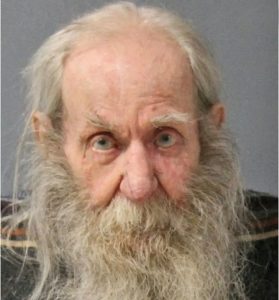
JON KEITH MILLER
By LeAnn R. Ralph
MENOMONIE — A Dunn County judge has set bail at $1 million cash for the suspect accused in the murder of Mary K. Schlais in February of 1974 in the Town of Spring Brook.
Jon K. Miller appeared by video from the Dunn County jail on November 12 for a bail hearing before Judge Christina Mayer, according to on-line court records.
Dunn County District Attorney Andrea Nodolf asked the court to set a cash bail of $1 million, but Miller’s attorney, Shelly Tomtschik, said that Miller would not be able to post that amount of cash.
Judge Mayer set bail at $1 million cash and scheduled a preliminary hearing for November 21 at 8:30 a.m.
Well-known case
During a news conference held on Monday, November 11, Sergeant Jason Stalker of the Dunn County Sheriff’s Department, said that the cold-case murder in the Town of Spring Brook was a well-known case within the sheriff’s department and also a frequent topic of discussion, even though the murder occurred 50 years ago.
The news conference on November 11 was the second news conference held by the Dunn County Sheriff’s Department following Miller’s arrest on November 7 in Minnesota.
Mary Schlais’s body was found in a snow bank in the Town of Spring Brook on February 15, 1974. She had been stabbed multiple times.
A stocking cap found at the crime scene contained several hairs that were later determined not to belong to the victim.
Over the next several decades, DNA from the hat resulted in a partial male profile, but when the DNR profile was loaded into the Combined DNA Index System (CODIS), there were no matches, Stalker said.
Mary K. Schlais’s body eventually was exhumed in order to try to find new evidence, he said.
After investigators started working with the genetic genealogists at Ramapo College, a family lineage was identified and leads were developed, Sergeant Stalker said.
Ramapo College
Early in 2021, the Dunn County Sheriff’s Department had exhausted the possibilities available from the partial DNA profile developed by using the stocking hat, said Investigator Dan Westlund.
The CODIS database contains the genetic profiles of people who have been convicted of felonies. If the person that law enforcement officers are seeking has not been convicted of a felony, there would be no direct matches of DNA in the CODIS database.
In the fall of 2022, representatives from the Dunn County Sheriff’s Department started talking to personnel at Ramapo College, Investigator Westlund said.
In March of 2023, Ramapo College started using the “investigative genetic genealogy” process to examine the partial DNA profile that was developed from the stocking hat left at the crime scene, he said.
In the fall of 2023, Cairenn Binder of Ramapo College developed a family lineage from the partial DNA profile, Investigator Westlund said.
In January of 2024, the investigation started to identify the individual from whom the partial DNA profile had been developed. In May of 2024, investigators from the Dunn County Sheriff’s Department interviewed two individuals in Wyoming an Michigan who were closely related, as either a first or second cousin to the partial DNA profile, he said.
After the two individuals were interviewed and were determined not to be the contributors of the DNA in the partial profile, all of the male possibilities in that family lineage had been exhausted, Investigator Westlund said.
After further IGG work, personnel at Ramapo College developed the hypothesis that the individual connected to the case had been adopted, and on October 18, 2024, Ramapo College found another person to contact, he said.
Mary’s birthday,
On November 4, 2024, Dunn County Sheriff’s Department investigators interviewed a person who turned out to be the suspect’s daughter, and Jon K. Miller was identified, Investigator Westlund said.
November 4, 2024, would have been Mary K. Schlais’s 76th birthday, he said.
On November 7, 2024, investigators interviewed Jon K. Miller, and after he had admitted his involvement in Mary Schlais’s murder, he told the investigators that as soon as he had opened the door and saw them, he knew why they were there, Investigator Westlund said.
Never gave up
The Dunn County Sheriff’s Department and Mary Schlais’s family never gave up on seeking justice for Mary, said Professor David Gurney of Ramapo College, who had also worked on the case.
IGG uses “reverse engineering” to identify a family tree, he said.
The partial DNA profile was uploaded to two sites, Family Tree DNA [which pioneered the field of genetic genealogy and was founded in 2000] and GEDmatch Pro [a forensic portal that helps law enforcement and forensic teams use DNA profiles to help solve crimes], Gurney said.
The IGG process looks at which DNA is shared with which subjects and also uses public records, such as U.S. census records, to develop the family tree to see where the suspect might fit in and to develop a lead for law enforcement, he said.
IGG is a powerful tool that uses specialized labs to develop leads. DNA technology was first used in the 1980s, Gurney said.
In 2022, the IGG program opened at Ramapo College with the goal of providing pro bono services where those services are needed across the county by law enforcement and medical examiners, he said.
People who have used consumer genetic DNA tests are very important in solving cases and can help bring justice to victims, Gurney said.
Gurney urged people to take a DNA test so that those profiles can be used in the databases to help solve crimes.
Rewarding experience
Being able to provide information to identify a suspect was a rewarding experience, Binder said.
“It takes a village to be able to solve a crime like this,” she said.
The family tree research took over a year to complete, Binder said.
“We are thrilled IGG has advanced the investigation after more than 50 years,” she said.
The Mary Schlais “case is very old, but it has never collected dust (in Dunn County),” Investigator Westlund said.
The closure would not have been possible without the IGG process and the people at Ramapo College, he said.
“This is about justice for Mary and closure for her family,” Investigator Westlund said, noting that Mary Schlais was an artist, an equestrian, an aunt, a sister and a daughter.
Adopted
Since the cousins who were identified did not know anything about another person who was closely related to them, the researchers at Ramapo College developed the theory that Miller had been adopted.
The process of identifying Miller used public records and internet searches and the cooperation of the cousins, Binder said.
Through the cooperation of the relatives, researchers using the IGG process were able to piece together where the unknown child had fit in, she said.
One reporter asked how researchers go about looking for an unknown family after the adoption theory has been formulated.
There are certain things you see in family trees when people are trying to fill in the unknowns, Binder said, adding that in this particular case, they did not have access to adoption records.
Hits
When the IGG program started in 2022, Gurney said that he and Binder had contacted law enforcement agencies in areas they were familiar with.
For example, Gurney said, he is originally from Minnesota, so the IGG program contacted agencies in Minnesota and Wisconsin.
The IGG program started to get cases from all over the country, and the work on the criminal cases is done “in house,” he said.
Regarding a question about the “hit” rate, Gurney said it is difficult to say how many cases have had a positive hit when trying to identify a suspect.
So far, Ramapo College has provided leads in 17 cases, and there are another 75 cases in which researchers are in various stages, he said.
Some cases can be solved in an hour, and some cases take thousands of hours, Gurney said.
When asked about his reaction to the charges filed against Miller, Gurney said, “my primary reaction is happiness that hopefully there will be justice for Mary.”
Gurney said he wanted to emphasize that IGG only gives leads to law enforcement, and it is law enforcement officers who follow the leads.
When asked about the hit in the spring of 2023 for the Schlais case, Binder said that the DNA match was between first and second cousins and that she knew then “it was a highly solvable case” because investigators only had to work a few generations back.
Minnesota
One reporter asked where Miller had been for all of his life.
Miller is 84 years old, and “to our knowledge” he has been in Minnesota for most of his life, said Dunn County Sheriff Kevin Bygd.
His DNA was not loaded into the system, but he could have been involved in some crime prior to the time that it became mandatory for people convicted of felonies to provide DNA, he said.
When asked about the DNA from the stocking cap, Investigator Westlund said the partial DNA profile had been generated many years ago, around 2008, but that it was not until IGG came along that the DNA became useful for identifying a suspect.
Even though there were no previous leads from the DNA profile, investigators in Dunn County still continued to work on the case, Investigator Westlund said.
The IGG research allows investigators to search for people who have not previously been convicted of crimes, he said.
Mary Schlais was from Minneapolis, and she was hitchhiking to Chicago to attend an art show in February of 1974.
She is buried in Champlin Cemetery in Hennepin County, Minnesota, according to information available on Find-A-Grave.
Her mother, Kathryn Schlais, died in 1986, and her father, Arnold Schlais, died in 1987.
A brother, James Arnold Edwards Schlais, died in 1993.


