
World War II Veteran, Gilmer Hagen recently celebrated his 100th birthday
PROTECTED CONTENT
If you’re a current subscriber, log in below. If you would like to subscribe, please click the subscribe tab above.
Username and Password Help
Please enter your email and we will send you a password reset link.
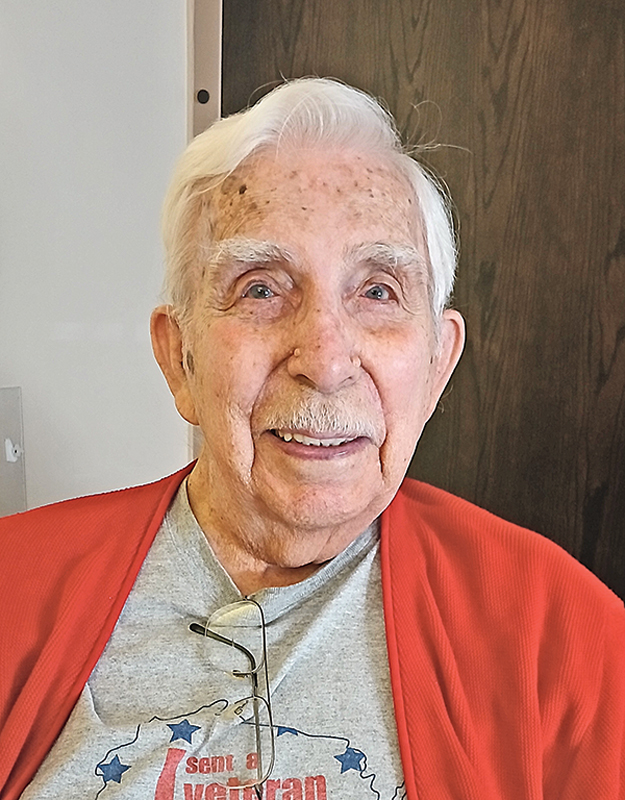
Gilmer Hagen
By Missy Klatt
Long time Menomonie resident, Gilmer Hagen, recently celebrated his 100th birthday. Gilmer is also veteran of World War II.
Gilmer was born on September 29, 1924 in Prairie Farm in an all Norweigan community, his family moved to Menomonie in 1929. At that time Gilmer couldn’t speak any English and his dad took him to the old East School and said teach my son some English. Gilmer was an only child.
He later graduated from Menomonie High School in 1943.
Gilmer was a year older when he graduated from high school due to the fact that he stayed in first grade for two years so he could learn English so when he turned 18, like most young men his age, he was drafted. He told them that he couldn’t go that he was still in high school and more importantly to him he had just been named the Track captain for the 1943 season. They were able to get his draft deferred so he could finish high school before entering the service.
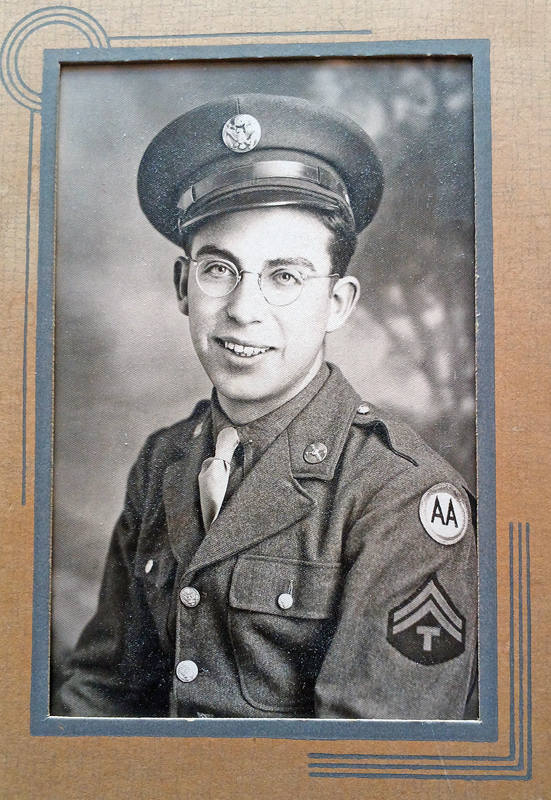 Gilmer and about five of his buddies went to the recruiting office hoping to join the navy. He tells the story; “To start out Uncle Sam’s service, they wanted to know what branch I wanted. I said navy. Well your not qualified because of my eye sight but the army will take you, they take most anything, they said.” So he went to the army and they asked what he liked to do and he replied “I like guns and ammunition.”
Gilmer was sent to Fort Bliss at El Paso, TX for his basic training. Most of his training was done in various locations around the desert in the south west, however he did some training at an army base in Florida where he ran into his uncle, who happened to be an MP on the base. They then sent him to a
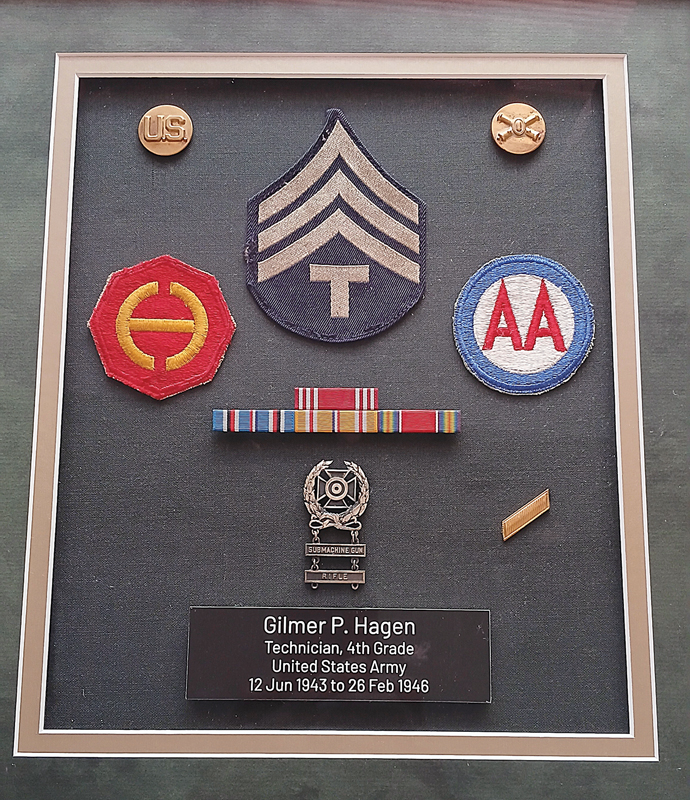
Gilmer Hagen patches
radar school where he learned to work with radar and search lights. “I was one of the better key men operating a search light.” He goes on to say that he worked with powerful search lights that spotted a line about 100 miles up in the air so they could spot airplanes. He said that’s probably where his eyes went haywire. You had to identify the airplane in the scope and tell whether it was friend or foe. He also spent time using a large machine gun, as part of their job was to escort friendly aircraft and keep them safe in their area.
When Gilmer was shipped out to go to the south pacific from the Seattle with 800 other men the ship they were assigned to was a cargo ship because they didn’t have any transport ships available. They then sailed into a typhoon. Gilmer jokes; “if you ever want to get sick, get into a typhoon.”
During the storm the cargo shifted and the ship started taking on water. The closet port was Pearl Harbor so all of the 800 men were unloaded there while the ship went on to get repaired. However it ended up sinking on the way and all of the records for the 800 men went down with the ship. So they had to get all their vaccinations again and then had a two week basic training in Hawaii.
It ended up that Gilmer never made it to the south pacific and spent most of the rest of his time in the service at Fort Kamehameha in Hawaii. Since Hawaii was so close to Japan he worked the searchlights and radar, looking for enemy attacks. Gilmer said he was placed in downtown Honolulu with a machine gun and a cannon waiting for the Japanese to invade Hawaii but it never happened. “But we were ready for them.” noted Gilmer.
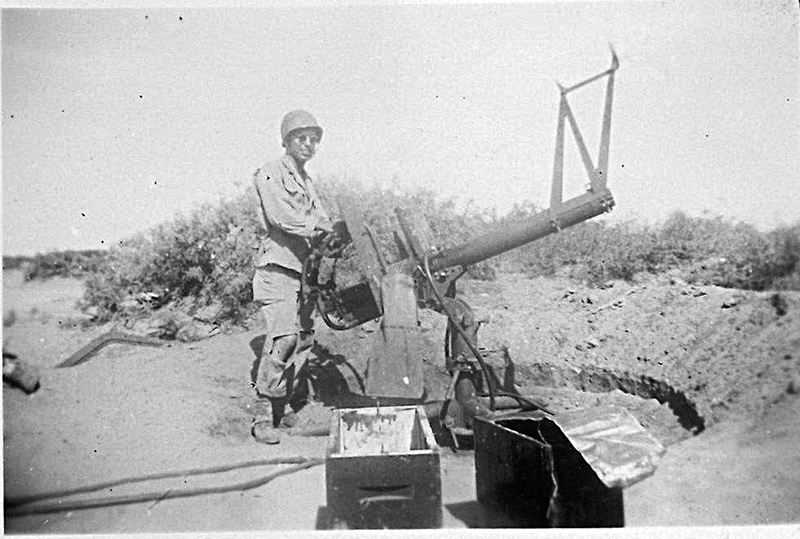
Gilmer Hagen during a training exercise in the desert.
One story that Gilmer tells of his time in the military was making friends with a kangaroo rat. Seems he was out in the desert keeping watch over his equipment when a kangaroo rat became interested in what he was doing. He actually became more interested when Gilmer shared his K rations with him. “He jumped up and looked at me and I said ‘do you want a piece?’” Gilmer said we got to “talking back and forth”. Gilmer jokes that it was the only friend he made out in the desert.
Another story he tells is about taking a swim test for another solider. Seems before they were to be sent over seas they had to jump off a 30 foot scaffold and then swim out. The only thing they had was their dog tags to identify who passed the test. Gilmer took the test and got out and they looked at his dog tags and checked his name off. Then he went back by the group of men yet to go and one fellow said “I can’t swim that.” Gilmer said we’ll exchange dog tags and for five dollars he would take his test. So that’s exactly what Gilmer did. He said that the five bucks kept in beer money for another week.
Guard duty was something Gilmer didn’t care for in the service. Another was KP duty and peeling lots of potatoes. He jokes that he peeled all those potatoes but they didn’t make any lefse.
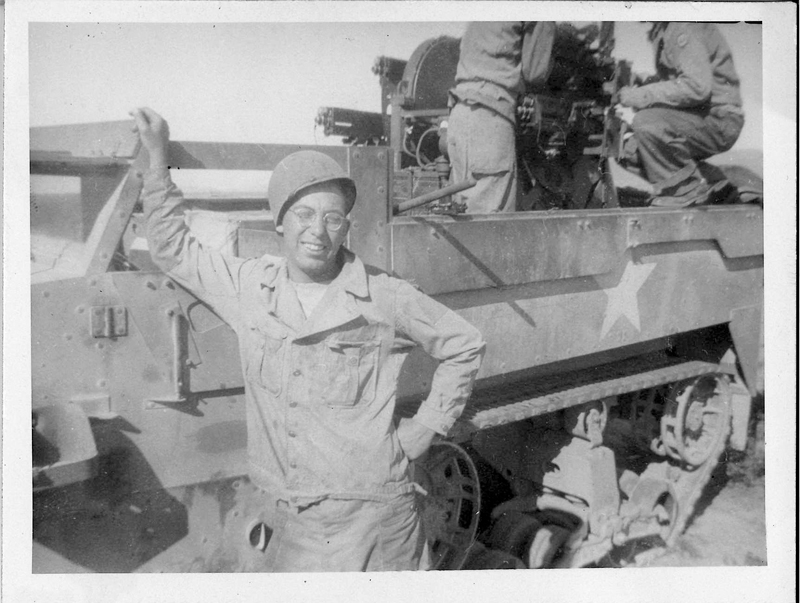
Gilmer Hagen standing along side of an army tank while serving in World War II.
The last four or five months that Gilmer was in the service he commented that the army kind of collapsed. They didn’t have any organization on what to do. “They didn’t say that in the newspaper but as one of the guys in there … you could see. ‘Oh that’s not my department.’ They passed the buck all the time.”
Gilmer was discharged from the army in February of 1946 from Fort McCoy, WI. Gilmer doesn’t remember how he got to Fort McCoy but he’s guessing it was a train from the west coast.
About his time in the service Gilmer jokes that the only thing he killed was a mosquito. He agrees with his daughter that he actually got pretty lucky by being waylaid in Hawaii and not actually making it to the south pacific.
In 1946 after he was discharged from the army he decided that it was time to look for a wife. He met his future wife, Joyce Schultz, at the old 400 Club. The next week he picked her up to take her to the movies and the rest as they say is history. They were married in June of 1948. Gilmer had started building his house in Menomonie at the end of 14th St. in 1947. He lived there until six and a half years ago when he moved into the Autumn Village. A few years later he moved over to the American Lutheran Home where he currently resides.
About his house on 14th Street, Gilmer remarks, “I made the plans up when I was in high school.” If things had been different, he might have gone on to school for architecture but Gilmer lamented that he didn’t have any guidance as far as going to college.
Gilmer and Joyce had three children, Trudy, Chad and Kim, seven grand kids and nine great grand kids. Sadly Joyce, Chad and Kim have all passed. Kim married an air force man, Warren Chellman, who retired as lieutenant Colonel. Their daughter, Kelly, went to the Air Force academy and was a pilot who flew C17’s. She too recently retired after 21 years in the service.
Ten years ago Gilmer, escorted by his daughter, Trudy, was able to go on one of the Honor Flights that flew out of La Crosse. Besides seeing all the monuments, Gilmer had the privilege of meeting Senator, Bob Dole. At the time Gilmer was in a wheel chair for the trip and Bob Dole was also in a wheel chair and he waved Gilmer over and said come here and sit by me. So they were able to have a nice conversation. Gilmer also has a photo of him and Dole together from that trip and his daughter was even able to take a recording of their conversation. Gilmer notes “he was the most influential man I ever met.”
Trudy’s daughter who is a physician, is in charge of the medical part of the Honor flights that fly out of Milwaukee and has gone on several flights with the veterans.