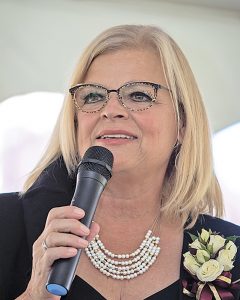
DEBORAH KERR
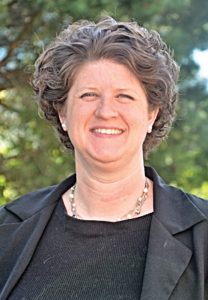
JILL UNDERLY
By LeAnn R. Ralph
COLFAX — Jill Underly and Deborah Kerr are the two candidates on the ballot in the April 6 spring election for state school superintendent.
Underly and Kerr received the most votes in the February 16 primary out of a field of seven candidates.
Jill Underly serves as the superintendent of the Pecatonica school district.
During an interview on Wisconsin Public Radio January 29, Underly said she is running for state superintendent because she wants to disrupt the inequity in school systems.
The opportunity gap must be addressed. More early childhood and birth-to-three programs are needed, the mental health professional shortage must be addressed, and the teacher shortage, which resulted after a decade of austerity cuts to education funding, must be addressed, Underly said.
Taxpayers should ask harder questions. The state spends more than $350 million on school vouchers, which was an expense that did not exist in 1993. Schools also have technology costs now that did not exist in 1993, she said.
The funding formula should be revised so schools can operate without going to referendum, Underly said.
As for the pandemic, students who are “well resourced” will be fine, but students in poverty, the English language learners and the special education students, do not have the support they need, she said.
Deborah Kerr is the former superintendent of the Brown Deer school district.
During an interview on WPR January 26, Kerr spoke about the achievement gaps in Wisconsin that have been made worse by the pandemic and that school districts are “losing ground” in educational programming.
The virus can be mitigated, and the risk can be mitigated, and those students who have been out of school for 12 months “will be in recovery for a long time,” Kerr said.
One of the positive aspects of the pandemic is that learning can happen at any time and does not have to be constrained by the school calendar. Summer school can also be an opportunity to help kids catch up, she said.
School funding formulas must be updated. Increasing funding for special education would free up money in school districts that could be used for other educational programming, Kerr said.
Increasing access to broadband also is vital for education, she said.
Kerr is in support of private school vouchers.


